In the first 12 months, your baby will undergo the most rapid growth and development of their lifetime. Most babies meet developmental milestones around a certain age, but some may take longer. Use this virtual developmental milestones chart to see if your child is on track.
Table of contents
What are developmental milestones?
Developmental milestones for infants are key indicators of your baby’s physical, social, cognitive, and emotional growth over their first year of life.
Our pediatric clinicians use these milestones to track your baby’s development and identify any potential delays or disabilities as early as possible. Pediatric Associates continues to track developmental milestones closely throughout early childhood, primarily through well visits.
Developmental milestones for children focus on many important skills, including:
Gross motor skills – Involve large muscle movements like rolling, sitting, crawling, standing, and walking
Fine motor skills – Involve smaller, more precise movements like reaching, grabbing, grasping, and manipulating objects with their hands and fingers
Social skills – Involve smiling, recognizing faces, interacting with others, and responding to social cues
Cognitive skills – Involve thinking, reasoning, problem-solving, and object permanence (recalling the memory of a person or object when they are no longer there)
Communication skills – Involve making sounds, understanding language, and using words
Emotional skills – Involve expressing emotions like joy or sadness, forming attachments, and separation anxiety away from their primary caregiver(s)
Tracking your baby’s development
As a parent, watching your newborn grow and learn new skills is one of life’s most rewarding experiences.
You can celebrate and easily track your baby’s development by using this virtual developmental milestones chart for infants. Take note of when your little one reaches certain milestones and share the information with your pediatric clinician at your next visit.
Remember, it’s common for babies to reach developmental milestones at slightly different times. Some babies naturally develop at a slower pace, while others hit their milestones ahead of schedule. The developmental milestones chart below is a general timeline, and minor variations are normal.
But what if your baby seems to be falling behind? Developmental milestones for infants are especially critical, as they often indicate future growth patterns and can signal potential delays or disabilities early on.
You know your child better than anyone else! If you have any questions or concerns about your baby’s development, including milestone delays, it’s best to consult with your pediatric clinician for personalized care.
Developmental milestones chart for 0-12 months
Here’s your guide to your baby’s first year and all the major developmental milestones to come. Special moments like these are signs that your infant is growing and developing as they should.
1 month
In the beginning, it may seem like your newborn does nothing more than eat, sleep, and cry. By the end of the first month, your baby is already becoming more alert and responsive.
Watch for:
Turns head towards sounds
Eyes wander and look at faces
Moves arms and legs randomly
Cries to express needs
2 months
At this age, your baby will begin to transition from smiling as a reflex to smiling socially – making all those sleepless nights worth it when that sweet smile is directed at you.
Watch for:
Smiles at others
Coos and makes soft sounds
Follows people and objects with eyes
Holds head up briefly
3 months
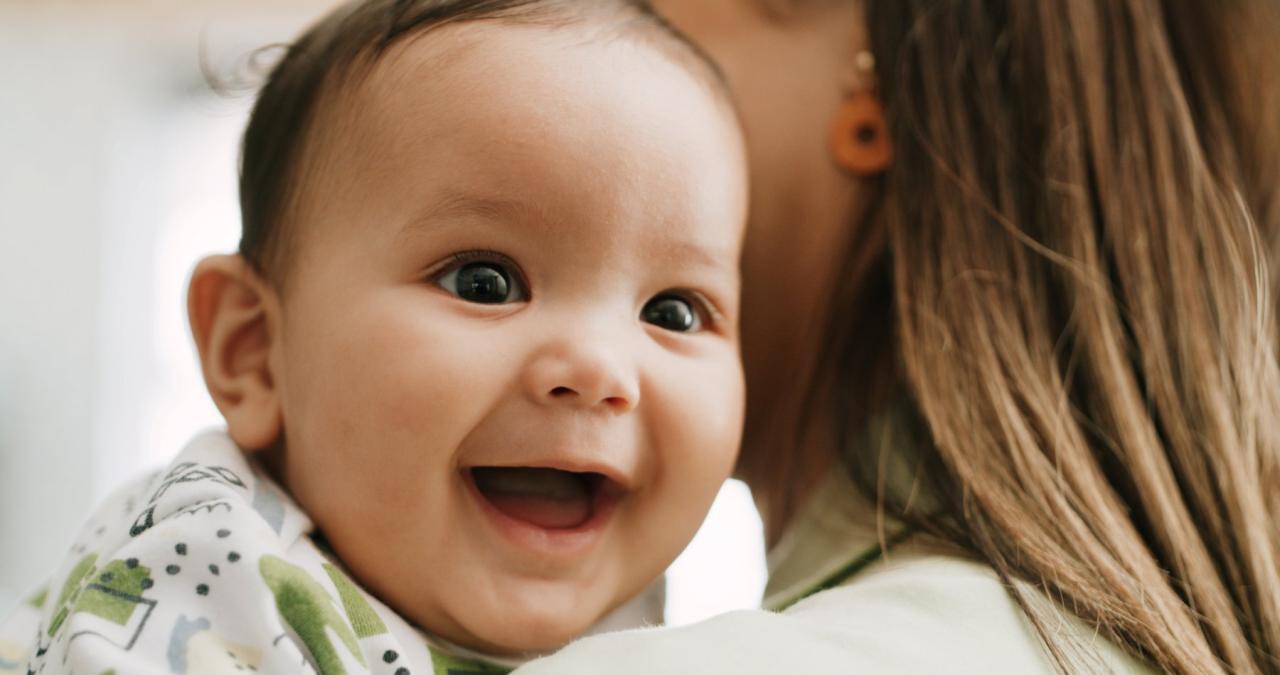
By the time your baby is 3 months old, they will have transformed from a totally dependent newborn to an active infant discovering their voice and body. (Don’t be surprised if your baby becomes fascinated by their own hands!)
Watch for:
Opens and closes hands
Brings hands to mouth
Turns head to voices
Pushes up on arms during tummy time
4 months
The fun continues as your baby becomes even more social and begins to laugh.
Watch for:
Babbles (says “ah” and “oh”)
Laughs out loud
Reaches for toys
Rolls one way (front-to-back or back-to-front)
5 months
Even though your baby cannot explore freely yet, they are gaining strength and becoming more curious about the world around them.
Watch for:
Rolls both ways
Plays with hands and feet
Puts everything in mouth
Sits with support
6 months
Your baby is halfway through the first year! As their motor skills continue to develop, their social awareness does as well.
Watch for:
Briefly sits without help
Rocks on hands and knees
Recognizes familiar faces
Responds to name
7 months
Your baby is becoming even more mobile and interactive and begins to develop fine motor skills with their hands.
Watch for:
May start crawling
Transfers toys between hands
Enjoys games like peek-a-boo
Reacts to emotions
8 months
Once your baby is on the move, they begin to explore the world around them and understand object permanence. They also begin to realize what “no” means.
Watch for:
Crawls or scoots
Pulls to stand
Points at things
Understands “no”
9 months
Around this time, your baby’s adorable sounds might begin to resemble actual words. Their fine motor skills also take a big leap as they learn how to pick up things.
Watch for:
Cruises (moves while holding furniture)
Picks up tiny things using the pincer grasp (thumb and index finger)
May say “mama” or “dada”
Plays clapping games
10 months
Your baby is even more active, likely trying to get into anything and everything they can. They are also more talkative and may begin to imitate others.
Watch for:
Stands with support
Waves bye-bye
Imitates sounds and actions
Understands simple words
11 months
Your baby is extremely curious and wants to try new things. This newfound independence means that your baby won’t be a baby for much longer! They also begin expressing their emotions – another sign the toddler years are coming.
Watch for:
Stands briefly without help
Says simple words
Tries using objects (such as a spoon or cup)
Express emotions
12 months
Over the past 12 months, your baby has achieved many major milestones – from babbling to talking, from crawling to standing, and so on. Once your baby starts to walk, being able to move from place to place on their own gives them a great sense of freedom.
Watch for:
May take first steps
Says 1-3 words
Can follow simple directions
Recognizes self in mirror
Again, all kids develop differently, and yours may not follow the timelines of these milestones exactly. To find out if your baby is on track, schedule a visit with Pediatric Associates today.