When selecting and using baby equipment, safety is always a top priority. You should use extreme caution when choosing equipment and toys for newborns and infants – and even more importantly, know how to use them properly. From car seats to strollers to swings and everything in between, here’s how to keep your little one safe.
Table of contents
Become an educated shopper
From the moment you bring your newborn home, keeping your baby out of harm’s way is a full-time job. Infants and toddlers don’t know when something is not safe for them, so the responsibility falls on us as parents. Fortunately, there are many things you can do to select the safest newborn and baby equipment.
For starters, always choose products that meet or exceed Consumer Product Safety Commission (CPSC) standards. These standards were created to protect the public from risks of serious injury or death from thousands of types of household products, including newborn and baby equipment. The Consumer Product Safety Improvement Act (CPSIA) specifically targets children’s products, empowering the CPSC to test and regulate these products with a strong focus on safety.
You can read reviews and research product safety at saferproducts.gov, a public database of incidents reported to the CPSC. Parents can also use the database to identify any unsafe products they encounter. Never assume that baby gear manufactured and sold in the United States is safe without checking here first.
Follow instructions
The safest product available may not stay that way if you don’t follow the manufacturer’s instructions closely. Many types of newborn and baby equipment come with detailed instruction manuals, which you should always take the time to read thoroughly before use.
These manuals often provide specific instructions on how to assemble the product, which is especially important for items like cribs, car seats, and strollers. They also explain how to correctly operate the product, ensuring that it works as intended and won’t harm your newborn or baby.
If the baby gear in question has age, height, or weight recommendations, be sure to follow them closely as well.
Avoid secondhand gear
Purchasing gently used baby gear or accepting hand-me-downs can certainly save you money, but you should avoid secondhand baby gear unless you can confirm that it meets current safety standards and hasn’t been recalled. Check for CPSC recalls here.
Register your products
Registering your newborn and baby equipment is crucial for safety purposes. New baby gear often includes information about how to register the product online or by mail. Doing so allows the manufacturer to contact you directly if the product is recalled, keeping you aware of any potential hazards so you can take appropriate action.
Next, let’s review safety guidelines for some of the most popular types of newborn and baby equipment.
Sleep products
Because sudden infant death syndrome (SIDS) often occurs during sleep, there are many safety issues related to sleep equipment, including bedding, cribs, bassinets, carriers, swings, or anywhere else your baby might fall asleep. Even wearable sleep products like swaddles and sleep sacks can be unsafe if used incorrectly.
Follow the ABC rule – Your baby should sleep alone, on their back, in a crib. This is the safest sleep position and significantly reduces the risk of SIDS. You can keep the crib close to your bed but never share a bed with your baby, which can lead to accidental suffocation.
Keep the crib clutter-free – Babies lack the motor skills to move objects away from their face, making soft items like pillows, blankets, and stuffed animals another suffocation hazard. Use a firm mattress with a fitted sheet only.
Pay attention to crib safety standards – Your baby’s crib should meet all current safety standards – for example, no drop sides and slats that are less than 2 3/8 inches apart. If you opt for a bassinet or portable crib instead, make sure it is sturdy and well-ventilated.
Avoid baby sleepers and positioners – Inclined sleepers and positioners are linked to SIDS and suffocation. Although banned, some companies still market these products as “loungers,” which you should also avoid.
Don’t use weighted baby blankets, swaddles, or sleep sacks – These items can place enough pressure on your infant’s chest to limit or stop their breathing.
Never leave your baby unattended if they fall asleep elsewhere – Babies often fall asleep in carriers, swings, bouncers, and the like. However, these types of equipment are not designed for safe sleeping, so it’s best to move your baby to the crib ASAP.
Car seats
Every year, thousands of children are injured or killed in vehicle crashes. Car seats are the best option we have to keep our children safe – but with so many different car seats to choose from, selecting one can be an overwhelming process.
Here are some car seat tips to follow for maximum safety:
Car seats must be used in the back seat of the vehicle only.
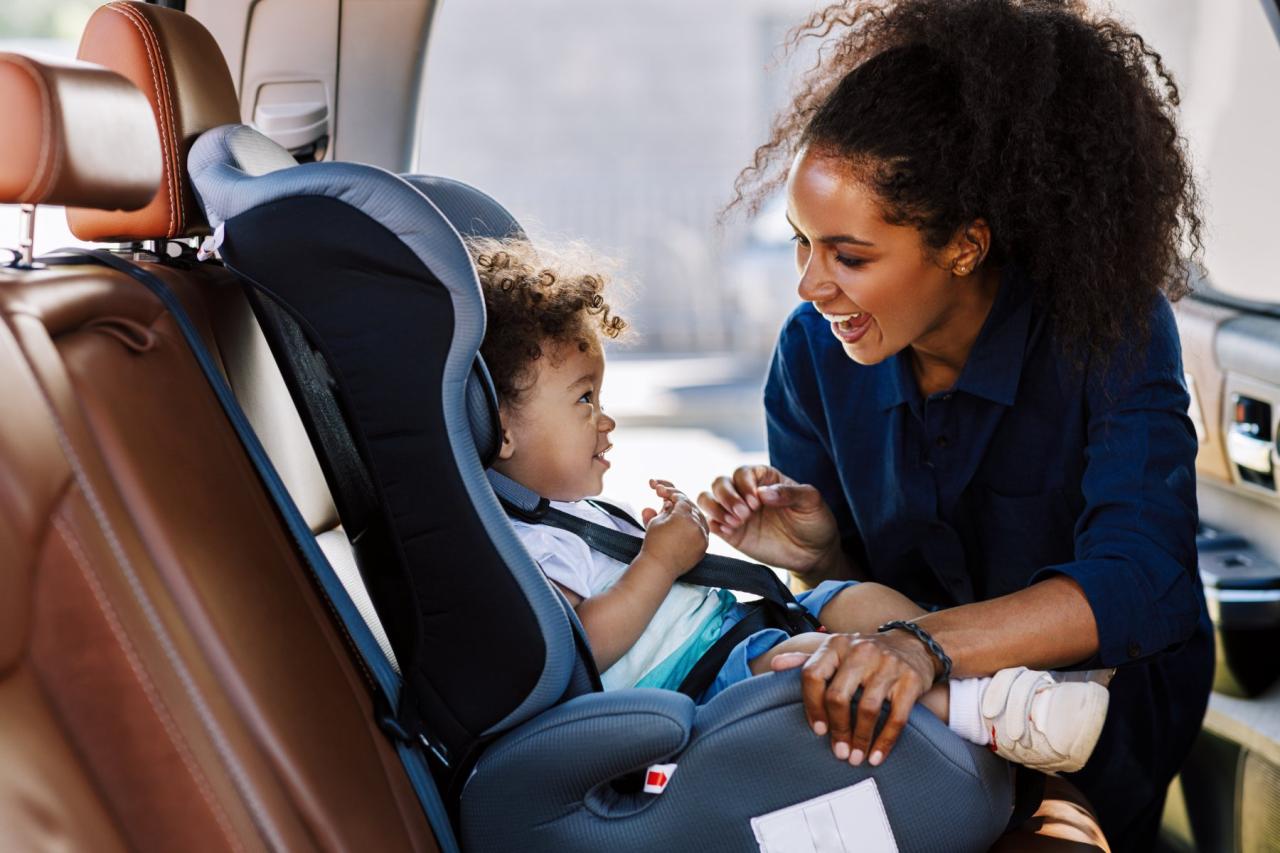
Use a rear-facing car seat from birth until at least age 2 (or until height and weight limits are reached).
Infant car seats can only be used rear-facing (up to 22-35 pounds and 30-35 inches, depending on the seat). Check the seat specifications for more details.
Convertible car seats are designed to adapt from a rear-facing harness for infants and toddlers to a forward-facing harness for older children, often continuing into a belt-positioning booster seat. Many parents find convertible car seats to be more economical than buying multiple car seats. Convertible car seats can often be rear-facing for longer as well (up to 60 pounds vs. 35 pounds for infant car seats).
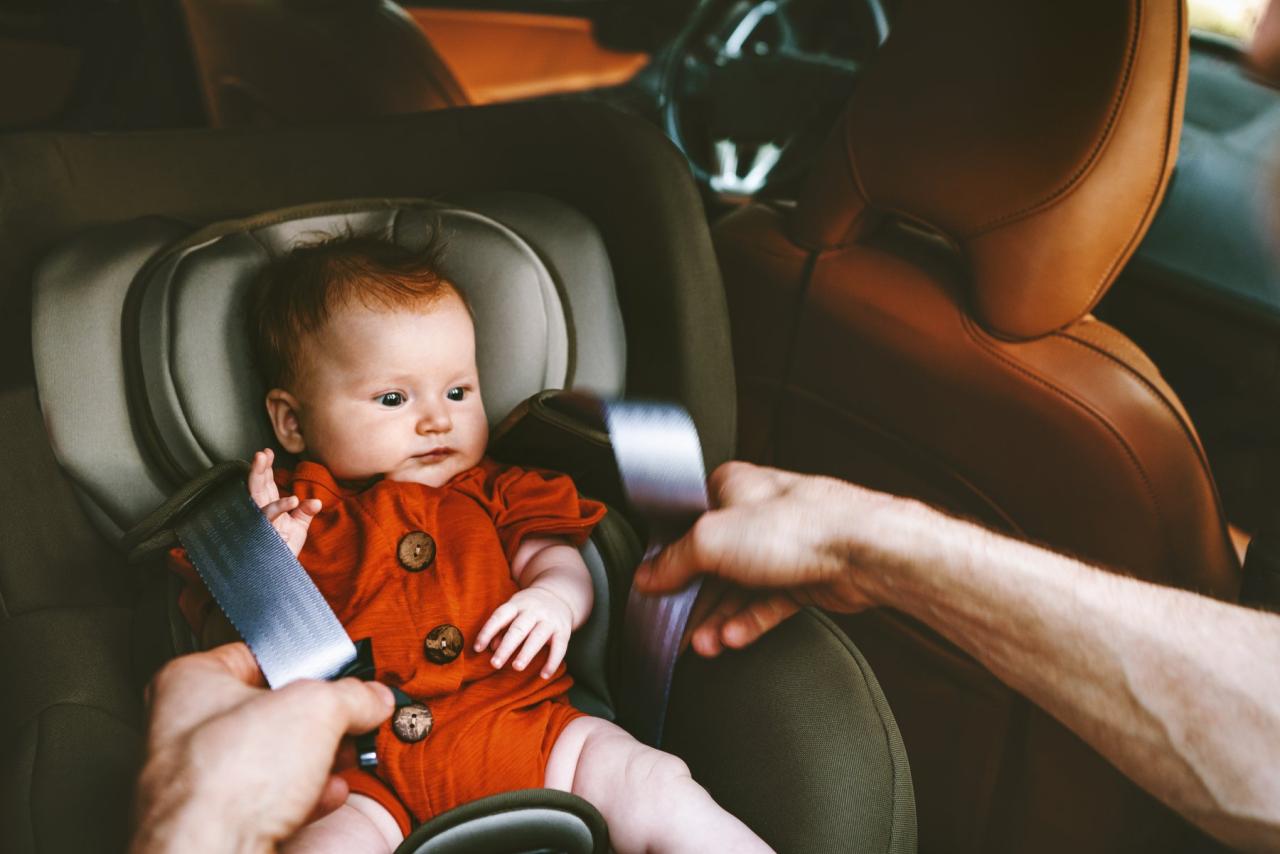
The car seat must be installed tightly with less than 1 inch of movement allowed. Harness straps should also be snug, leaving the chest clip at armpit level.
Never use a car seat on an elevated surface (such as a table or counter) or for feeding or sleeping. Car seats should be used for travel only.
Avoid aftermarket car seat accessories not approved by the manufacturer.
Replace all car seats if the vehicle is involved in an accident. The at-fault driver’s insurance policy will often cover the cost.
Do not purchase a used car seat, since it may have been used in an accident.
Today’s car seats include many impressive safety features, including the LATCH system (built-in straps with hooks that connect to anchor points on the vehicle’s seat). The locking mechanism secures the seat by locking the seat belt during installation, preventing the seat from shifting during a crash.
Some rear-facing car seats also include load leg or anti-rebound bar features that help absorb the energy of a crash. Load legs reduce forward rotation during the initial phase of a crash, while anti-rebound bars protect your baby from rearward rotation during the second phase.
So, buckle up! And remember to put your baby in their car seat every time you drive – even just down the block.
Highchairs
Choking and food allergies aren’t the only safety worries you should have while your baby is eating. Highchairs are much taller than regular chairs, creating a dangerous fall hazard. The CPSC reports that more than 9,000 U.S. children visit the emergency room with highchair-related injuries every year.
Be sure to follow these highchair safety and positioning tips:
Use a highchair only with the safety straps secured, including the crotch strap.
Never leave your baby alone while eating.
Place the highchair away from walls or counters to prevent tipping.
For collapsible or foldable highchairs, make sure the chair is fully locked before placing your baby inside.
Also make sure the tray is fully locked to prevent finger injuries.
Clean and inspect the highchair regularly for cracks or loose parts.
When can babies sit in a highchair, and when do babies stop using highchairs? Babies typically start using a highchair around 6 months of age, if they are able to sit up on their own with minimal support – perfect timing for the start of solid foods.
Babies usually transition out of the highchair by age 3, and some do well before then. Signs of readiness include being able to sit up without support, becoming more independent with feeding, and showing interest in the family dining table.
Swings, bouncers, and rockers
Can babies sleep in swings? Are bouncers bad for babies? And are rocking chairs safe for newborns? You likely have a lot of questions about these popular ways to soothe and entertain your baby.
To keep your baby safe, you should:
Use these devices only with the safety harness securely fastened and only on the floor – never on beds, sofas, tables, counters, or other elevated surfaces.
Never allow your baby to sleep in a swing, bouncer, or rocker. If your baby falls asleep, move them to a crib or bassinet as soon as possible.
Limit use to short, supervised periods to avoid positional asphyxia (when the position of your baby’s body interferes with their ability to breathe).
Never leave your baby unattended.
Strollers
Most parents use strollers from day one for transportation and convenience. Newborns can be placed in strollers that fully recline or have a car seat or bassinet attachment – just pop in the attachment and go.
Infants can typically use upright strollers around 6 months of age, depending on their head and neck control, ability to sit up with minimal support, and other developmental milestones.
When using any type of stroller, remember to:
Always engage the brakes when parked.
Avoid hanging heavy bags on the stroller handles, which can cause tipping.
Use the safety harness at all times (a 5-point harness is best).
Make sure the stroller frame is locked before placing the baby inside.
Be cautious when folding and unfolding the stroller to prevent finger injuries.
If you have a side-by-side stroller that carries more than one child, the footrests of the stroller should extend across all sitting areas for extra safety.
Baby carriers and slings
Baby carriers and slings are another convenient way to keep your baby comfortable on the move. While they help keep a busy parent’s hands free, they can also create safety risks if they aren’t used correctly. Keeping your baby in a carrier or sling that forces their legs into an extended or straight position for too long can even cause hip dysplasia (abnormal development of the hip joint).
The guidelines for using baby carriers and slings include:
Never place premature infants or babies with breathing problems in these devices.
Avoid carriers for babies under 4 months unless specifically designed for newborns.
Suffocation is a serious risk, particularly for infants in carriers or slings that press their face against the fabric or their chin against their chest. Make sure your baby’s mouth and nose aren’t blocked by fabric or anything else, including your own body.
Your baby’s face should be visible and kissable at all times, and their airflow should never be restricted.
Choose a carrier or sling that supports your baby’s head, neck, and hips.
Your baby’s neck should be straight, and their chin should never press against their chest.
The carrier or sling should allow your baby’s legs to spread to keep their hips in a stable position.
Bathing equipment
Water and safety rarely mix, unless you’re putting out a fire! Still, bathing your baby is an experience that many parents’ treasure. Bathing provides a great way to bond with your baby as they enjoy the new sensation of warm water on their skin.
Here are some ways to make your baby’s bath time as safe as possible:
Never leave your baby alone in bath water, even for a second. Babies can drown in very little water, so it’s essential they have constant supervision. Always keep your baby within arm’s reach – and within eyesight.
Use a slip-resistant baby tub with built-in support to prevent your baby from going underwater. Avoid infant tub torso-support devices and neck floats, which are considered dangerous.
The water temperature should be around 100°F. Test the water with your wrist or elbow first to make sure it isn’t too hot.
Don’t let your baby play with water beads, which expand when they get wet and can cause injury or death if inhaled and bowel obstruction if ingested.
Dry all bathing equipment thoroughly before storing to avoid mold and mildew.
Toys and teething products
Like water, toys and teething products are supposed to be fun but can still be very dangerous. Many toys are choking hazards, especially if they are not age-appropriate for your baby.
To make playtime safe, keep these facts in mind:
Avoid toys with small parts that your baby could accidentally swallow.
Teething necklaces and beads are not recommended due to strangulation and choking hazards.
Teething rings are okay but should be made of solid material (not liquid-filled) and BPA-free.
We care about your baby’s safety as much as you do! If you have questions, contact Pediatric Associates today.