

When your baby has not pooped for a day, what does it mean? For starters, don’t panic.
Having a bowel movement can be a major effort for newborns – and it shows. (Just imagine trying to poop while lying on your back, and you’ll understand.) When your baby is constipated, things get even more complicated. Learn what to do and when your pediatrician should get involved.
Table of contents
The scoop on poop
It sounds silly, but many parents are obsessed with poop. These parents know how often their child does (or doesn’t) poop, the color, the consistency, the faces their child makes when having a bowel movement – everything! And it’s usually for good reason.
Having bowel movements is a critical part of digesting the food we eat and eliminating waste. Healthy, regular bowel movements are a good sign of overall health for children and adults alike, just as unexpected changes in frequency, shape, and color of bowel movements can indicate that something isn’t right.
All babies are unique, including how often they have bowel movements. Some newborns will poop after every feed, while others may only poop every few days. Newborns typically have a bowel movement every day for the first month or two of life. After that, they may go up to a week between bowel movements (5 days for formula-fed babies and 7 days for breastfed babies).
As long as your baby is growing and well, the exact number of bowel movements does not matter. However, if your newborn’s bowel movements slow down suddenly, they begin to strain harder, or their stools are hard and dry, constipation might be the issue. Pediatric Associates is here to help you get down to the bottom (literally) of why it’s happening.
All babies strain while pooping
Before we take a closer look at constipation, let’s explain why babies strain while they are pooping. It’s easy to assume that your newborn is constipated with their first few grunts, but they are actually learning how to coordinate their muscles for a bowel movement – a condition called infant dyschezia.
Newborns don’t know how to relax their pelvic floor muscles to push out stool, often tightening them instead. Most babies push with their abdominal muscles while their anal muscles remain clenched. And they don’t have gravity on their side, since they are usually lying flat.
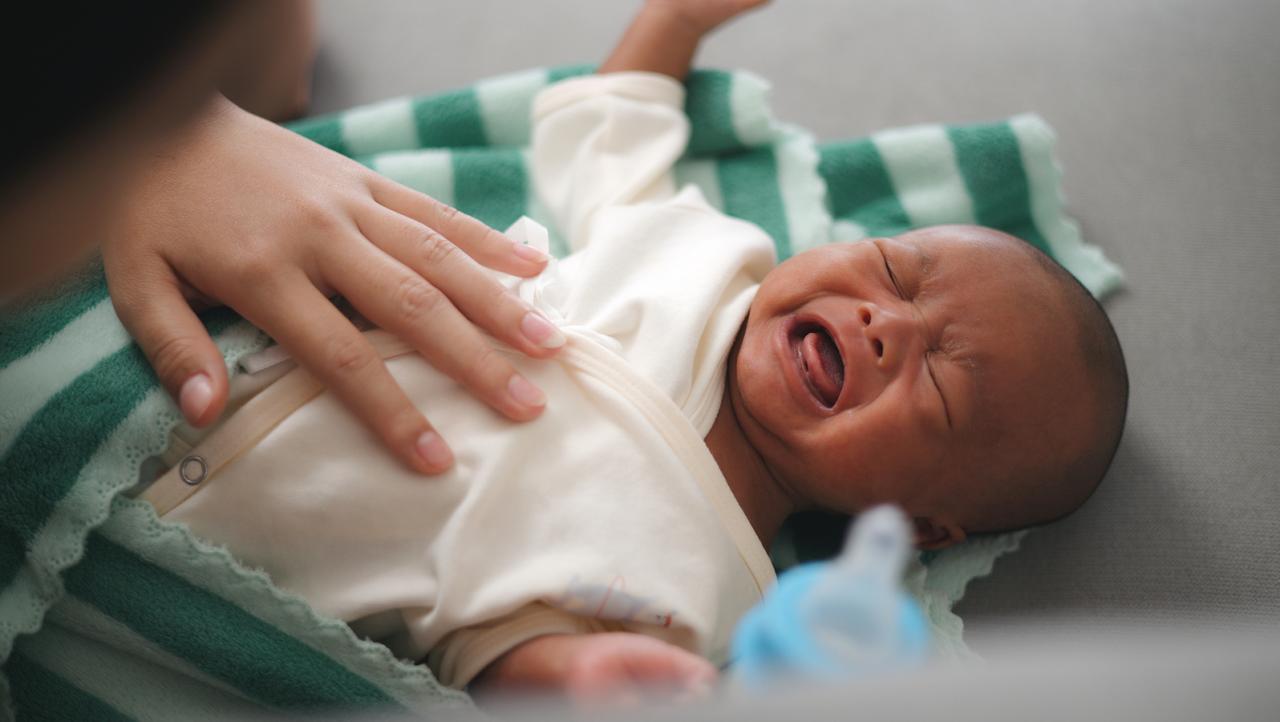
Therefore, your newborn may strain, grunt, cry, or turn red in the face, even when they are passing soft, normal stools. Of course, constipated stools are another matter.
What is constipation?
Constipation is a health condition that causes infrequent bowel movements and/or hard, dry stools that are difficult or painful to pass. Constipation happens when stool moves too slowly and remains in the colon for too long. The colon then absorbs too much water, leaving hard, dry stools behind.
What causes constipation in babies?
Diet
One of the biggest causes of constipation in babies is a change in diet, such as:
Switching from breast milk to formula (or vice versa)
Weaning off breast milk
Weaning off infant formula
Transitioning to solid foods
Trying new foods or flavors
It’s more common for formula-fed babies to become constipated than breastfed babies. That’s because infant formula is generally thicker than breast milk, with larger protein clumps that can be more difficult for your baby’s digestive system to process. Infant formula also takes longer to pass through the gastrointestinal tract than breast milk does.
While this doesn’t apply to newborns – whose nutritional needs are met by breast milk or infant formula – a lack of fiber can also cause constipation in babies 6 months or older, especially when they switch to solid foods. Increasing your baby’s intake of fiber-rich foods may help, such as:
Fruits – Pureed prunes, pears, plums, and peaches
Vegetables – Beans, peas, and other pureed vegetables
Grains – Oatmeal, wheat, or barley cereals
Dehydration
Because dehydration also causes constipation, it’s important for your baby to drink plenty of fluids, including breast milk, infant formula, and/or water (after 6 months of age). Adding fiber to their diet without sufficient fluids can also make constipation worse.
Reaction to breast milk
Breastfed babies generally experience less constipation, but a breastfeeding mother’s diet may become a factor if the baby reacts to certain foods in the milk. Things like dairy, soy, wheat, eggs, and iron supplements can potentially cause constipation in breastfed babies.
If you are breastfeeding, your pediatrician may ask you to stop eating certain foods to see if your baby’s constipation improves.
Other causes
Some babies are simply predisposed to constipation, even if they have a healthy diet and plenty of fluids. In extreme cases, problems with nerve endings in your baby’s bowel and other rare conditions may be responsible. All babies are checked for these conditions as part of routine well visits, but be sure to let your pediatrician know if you have any specific concerns.
Symptoms of newborn constipation
It takes time for newborns to develop a bowel movement routine, but your baby may be constipated if they:
Have fewer bowel movements
Are straining more while pooping
Strain without success
Have hard, dry stools
Are eating less
Spit up more frequently
Have a swollen or bloated belly
Are unusually fussy or irritated
A normal newborn’s stool changes from a dark green to black tar-like substance (meconium) after the first few days to soft, seedy, yellow-greenish stool for breastfed babies or slightly firmer, tan-colored stool for formula-fed babies.
Instead of being soft, constipated stools look more like small, hard pebbles or large, round golf balls. If your baby frequently has hard, painful stools like these, contact your pediatrician for assistance.
Surprisingly, your baby could also have bouts of diarrhea when they are constipated. This condition, known as paradoxical diarrhea, occurs when loose, watery stool passes around hard, impacted stool stuck in the colon.
Home remedies for newborn constipation
Many parents want to know how to relieve constipation in babies quickly – especially when their baby is experiencing it. Here are some newborn and 1-month-old baby constipation remedies along with options for older babies:
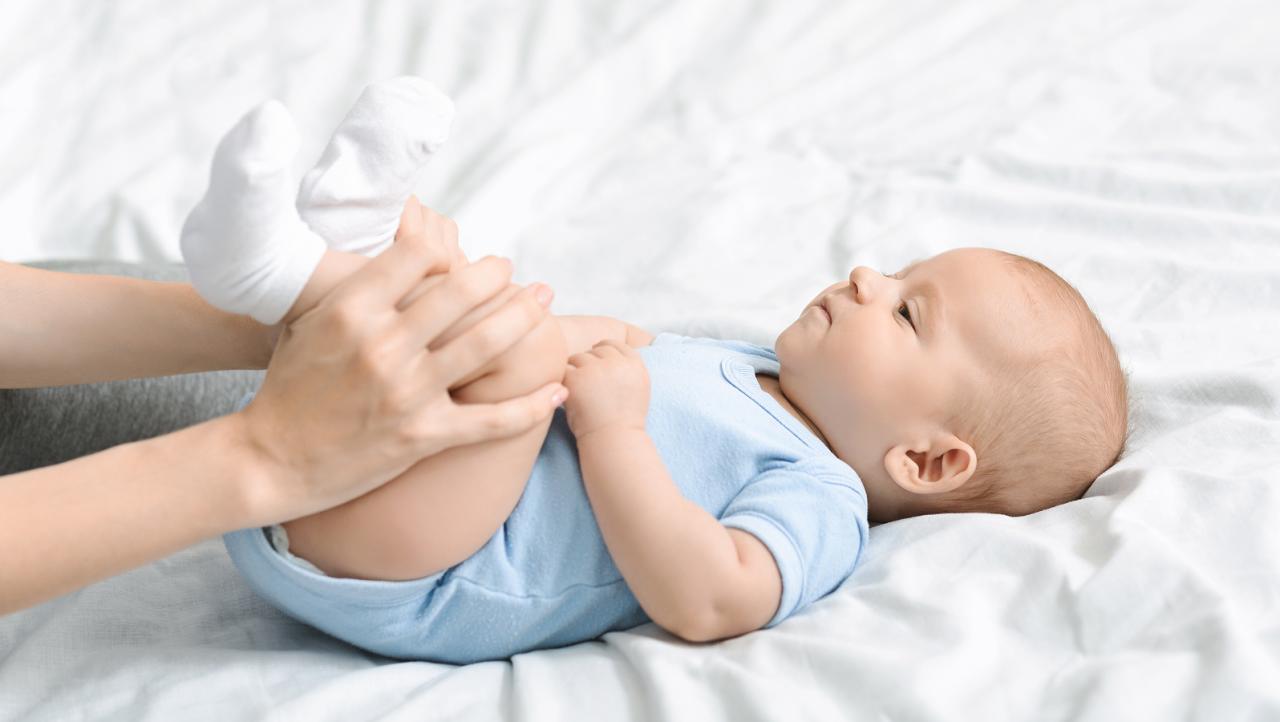
Get moving – Doing “bicycle exercises” (lay your baby on their back and gently move their legs in a pedaling motion) can encourage their bowels to move. Or you can try “squatting” (hold your baby’s knees to their chest to mimic a squat position, then release).
Relax more – Give your baby a warm, soothing bath to help relax their bowels. You can also massage your baby’s tummy in a clockwise direction, making firm but gentle circular motions from their belly button outwards.
Offer 100% fruit juice – Many pediatricians recommend prune juice for infants with constipation, along with other types of 100% fruit juice (such as pear, cherry, and apple). If your infant is not eating jarred baby food yet, give them only 1-2 ounces of juice per day. You should stop giving them juice if their stools become loose.
Replace juice with fruit when the time comes – Once your baby is old enough for jarred baby food, feed them pureed prunes, pears, plums, and peaches instead of giving them juice.
Choose a non-binding cereal – Rice cereal is not only low in fiber but a binding food that helps firm up loose stools, making it harder for them to pass through your baby’s intestines. To avoid constipation, opt for oatmeal, wheat, or barley cereal instead.
Try a glycerin suppository – If your baby still has not had a bowel movement after several days, a glycerin suppository may help. Lay your baby on their back and gently push the suppository into their rectum. Glycerin suppositories work by attracting water into the bowel, which helps soften the stool so it passes more easily. (Note: these suppositories are meant for occasional use only.) Please always consult with a predication before trying a suppository.
Take their rectal temperature –Taking your baby’s rectal temperature can also stimulate them to have a bowel movement. Place a small amount of petroleum jelly on the tip of a rectal thermometer, then gently insert it into their rectum.
Ask your pediatrician first – Contact your pediatrician before giving your baby laxatives, enemas, baby mineral oil, or other remedies to treat constipation.
Be patient – It may take a few days to get your baby’s bowels moving again.
When to seek professional constipation care
If you are worried that your baby is uncomfortable or in pain, have your pediatrician assess their symptoms first. Too many parents end up in an emergency room or urgent care for constipation issues, when they can often be treated at the pediatrician’s office instead.
In addition to the remedies above, your pediatrician may suggest over-the-counter treatments or medications to help ease your baby’s discomfort. They can also investigate if the constipation is a symptom of another underlying health issue.
Contact your pediatrician right away if your baby is constipated and:
Has a swollen belly with no bowel movements for 1-2 days
Has blood in their stool
Throws up
Has a fever
Won’t eat
Stops gaining weight
Is lethargic
Seems unusually tired
Develops a diaper rash that doesn’t improve
Has signs of a rectal infection
If your baby was previously treated for constipation but continues to struggle, it’s also important to revisit your pediatrician.