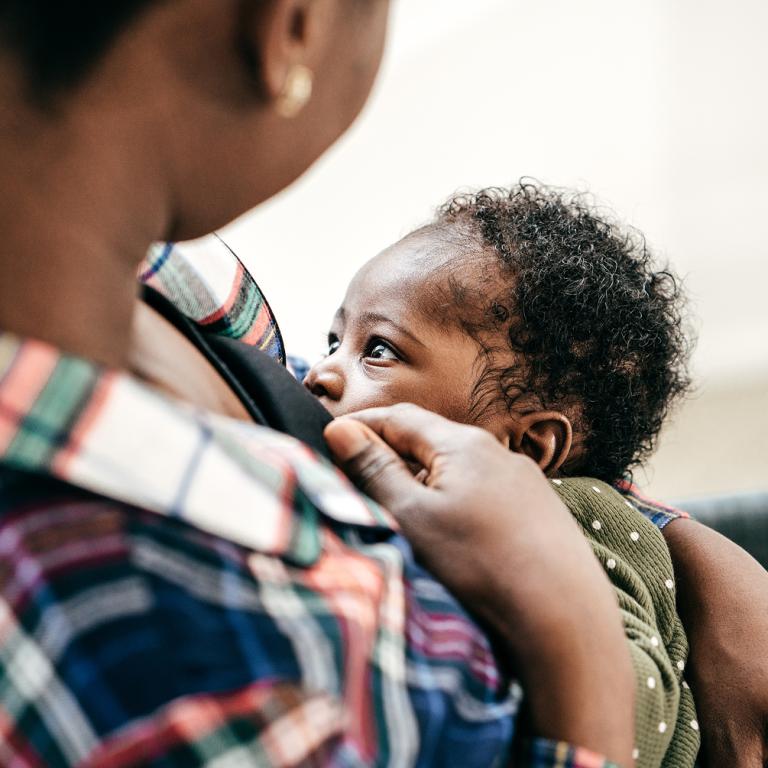
Different vaccines. One goal.
Vaccines offer proven protection against serious childhood diseasesβand peace of mind for parents. By vaccinating your child, youβre not just safeguarding their health, but also helping protect your community. Backed by decades of research and trusted by pediatricians, vaccines are a safe, effective way to keep kids healthy. We're here to give you clear, reliable information so you can make confident choices for your family.
How they work:
These vaccines use a weakened, or "attenuated," form of the living germ (virus or bacteria) that causes a disease. This weakened germ doesn't cause serious illness in healthy people, but it's strong enough to teach your immune system how to fight the real thing. Your body then develops a strong, long-lasting protective response.β¨β¨
What they're for and who they protect:
Measles, Mumps, and Rubella (MMR): Protects against measles, mumps, and rubella. Typically given to children (first dose around 12-15 months, second dose around 4-6 years). Also recommended for adults born in 1957 or later without evidence of immunity, and certain high-risk adults (e.g., healthcare personnel, international travelers).
Varicella (Chickenpox): Protects against chickenpox. Given to children (first dose around 12-18 months, second dose around 4-6 years).
Rotavirus (RV): Protects against rotavirus, which causes severe diarrhea and vomiting. Given to infants in a series of doses starting around 2 months of age.
How they work:
These vaccines use a "killed" version of the germ. The germ is completely inactivated (usually with heat or chemicals) so it can't cause disease. However, parts of the dead germ are still recognizable by your immune system, which then learns to build protection against it.β¨β¨
What they're for and who they protect:
Polio (IPV): Protects against polio. Given to children in a series of doses starting around 2 months of age.
Hepatitis A (HepA): Protects against Hepatitis A, a liver infection. Given to children in a two-dose series starting around 12 months of age.
How they work:β¨
Instead of using the whole germ, these vaccines use only specific parts of it, like a protein, sugar, or a piece of its outer coating. These "subunits" are enough to trigger a strong immune response. These ingredients are vital to making vaccines safe and effective.β¨
What they're for and who they protect:
Pneumococcal (PCV): Protects against pneumococcal disease, which can cause ear infections, pneumonia, and meningitis. Given to children in a series of doses starting around 2 months of age.
Haemophilus influenzae type b (Hib): Protects against Haemophilus influenzae type b, which can cause serious infections like meningitis and pneumonia. Given to children in a series of doses starting around 2 months of age.
Hepatitis B (HepB): Protects against Hepatitis B, a liver infection. Given to children starting at birth, with additional doses around 2 and 6 months. Also available for adults.
Human Papillomavirus (HPV): Protects against Human Papillomavirus, which can cause certain cancers. Recommended for children and adolescents, typically starting around 9-10 years of age.
Meningococcal (MenACWY, MenB): Protects against meningococcal disease, a serious bacterial infection that can cause meningitis. Recommended for adolescents, with doses around 11-12 years and a booster at 16 years. Meningitis B vaccine is also recommended.
How they work:β¨
Some bacteria cause disease by making harmful toxins (poisons) in the body. Toxoid vaccines use a weakened form of these toxins, called a "toxoid." This toxoid teaches your immune system to fight off the toxins, not the bacteria itself. So, if you're exposed to the real bacteria, your body can neutralize the toxins before they make you sick.
What they're for and who they protect:
Tetanus, Diphtheria, and Whooping Cough (Pertussis): Protects against tetanus, diphtheria, and whooping cough.
DTaP: Given to children in a series of doses starting around 2 months of age.
Tdap: A booster dose recommended for adolescents (around 11-12 years) and adults.
How they work:β¨
This is a newer type of vaccine. Instead of introducing a part of the germ, mRNA vaccines give your cells instructions (like a blueprint) to make a harmless piece of a protein from the virus. Your body's immune system then recognizes this protein piece as foreign and builds an immune response, including making antibodies. Once the instructions are delivered, your body gets rid of the mRNA.β¨β¨
What they're for and who they protect:
COVID-19: Protects against COVID-19. Available for both children and adults.
How they work:β¨
These vaccines use a modified version of a harmless virus (the "vector") to deliver important genetic instructions to your cells. These instructions tell your cells to make a protein that is found on the surface of the virus you want to protect against. Your immune system then recognizes this protein and builds a protective response. The viral vector used cannot cause disease in humans.β¨β¨What they're for and who they protect:
COVID-19: Available for both children and adults.
Not all vaccines work the β¨same way
Understanding how vaccines work and who they protect can help you feel more confident about them for both adults and children. Vaccines protect against many serious diseases, and they do this in a few main ways, depending on the type of vaccine.
Here are the main types of vaccines, how they work, and what diseases they protect against, explained simply:
Vaccine facts, myths, and more
Vaccine safety is the top priority in the medical community. Before any vaccine is approved, it goes through many years of careful testing by scientists and doctors and once approved, its safety is continuously monitored. The safety threshold for vaccines is higher than that of traditional drugs because, by definition, they're administered to those without a disease.
Serious side effects from vaccines are very rare but minor side effects, like a sore arm or a low-grade fever, are common and show that your child's immune system is building protection. The medical community takes vaccine side effects very seriously with the Vaccine Adverse Event Reporting System available to healthcare providers to catalogue any side effects outside of normal, minor irritation. Learn more about what to expect.
Hundreds of millions of doses of vaccines have been administered in the United States and the safety record is excellent.
It's trueβchildren do receive more vaccines now than in the past. Thatβs because medical science has developed safe and effective vaccines to prevent illnesses that once caused serious complications, hospitalizations, and even death. Diseases like meningitis, pneumonia, and sepsis are now far less common thanks to newer vaccines such as pneumococcal, meningococcal, and Haemophilus influenzae type b (Hib), which were introduced after many of us were children. The current schedule is built on decades of research to ensure children are protected at the ages when they are most at risk.
Vaccine ingredients are present in very small, safe amounts, often less than what your body naturally produces or encounters in daily life. Misinformation about ingredients, like mercury for example, can be scary. The scientific consensus is clear: the trace amounts of these ingredients in vaccines are safe and necessary to make the vaccines work effectively. The potential harm from these trace ingredients is infinitely smaller than the proven dangers of the diseases they prevent but we understand that this complicates the decision for parents.
The tiny amounts of antigens (the parts of the germ that trigger an immune response) in vaccines are far less than what a child encounters naturally.
Giving many vaccines at once helps protect kids from sickness when they are most likely to get sick, and when it's safe to give the shots. Getting them together or separately doesn't change how often kids have side effects. Also, vaccines that combine several protections are tested together to make sure they still work well and don't cause more side effects.
It's a common and understandable thought, but it's a bit like saying, "we don't need seatbelts anymore because car accidents are less common." The safety comes from the protective measure. The reason these diseases are rare is because of vaccines. If we stop vaccinating, these diseases can quickly return. We've seen this happen with measles outbreaks in communities with low vaccination rates.
For example, in 2025, the United States experienced its largest measles outbreak in more than 30 years, with over 760 cases in Texas alone and 1,700 cases nationwide. Nearly 96% of those affected were under-immunized, leading to more than 200 hospitalizationsβincluding one in five children under the age of five.
While a healthy lifestyle is important, it cannot fully protect against highly contagious and dangerous diseases like measles or polio. Vaccines train your immune system to recognize and fight off specific viruses and bacteria that can cause severe illness, something natural remedies cannot replicate. The historical data on childhood deaths before vaccines clearly shows that a strong immune system alone was not enough to prevent widespread illness and death from these diseases.
This is one of the most common questions parents ask. The short answer is noβvaccines do not cause autism. The idea started in 1998 with a small study involving only 12 children that suggested a link between the MMR (measles, mumps, rubella) vaccine and autism. That study was later proven to be fraudulent, retracted by the medical journal, and the author lost his medical license. Since then, researchers all over the world have looked closely at this question. Large studies following hundreds of thousands, and even millions of children show the same result, that there is no connection between vaccines and autism.
In Denmark, a study of over 650,000 children found no difference in autism rates between vaccinated and unvaccinated kids (Hviid et al., Ann Intern Med, 2019).
A review of studies involving more than 1.2 million children also found no link (Taylor et al., Vaccine, 2014).
Most recently, in 2025, a new Danish study of 1.2 million children looked at 50 different health outcomesβincluding autismβand again found no increased risk from vaccines or vaccine ingredients (Statens Serum Institut, Ann Intern Med, 2025).
We now know that autism begins very early in brain development, often before a baby is even born. Genetics play the biggest role. Autism is often diagnosed around the same time that children get certain vaccines. That timing, combined with misinformation, fuels the myth. Vaccines are safe, effective, and one of the best ways we have to protect children.