Fevers in children are common – and so are the fever-related fears of the people who care for them. Here’s the information you need to help keep infants and children with fever safe, including when to contact your pediatrician.
Table of contents
- Introduction
- What temperature is considered a fever?
- Understanding what a fever is
- When to call a pediatrician ASAP
- Not all fevers are the same
- Caring for a child with a fever
- How long should a fever last?
- Proper medication use for fevers
- Your thermometer options
- When febrile seizures occur
- How long should a fever last?
What temperature is considered a fever?
If your child has flushed skin or feels warm to the touch, you might wonder what temperature is a fever – and what you should do next.
In medical terms, a fever is a body temperature of 100.4°F or higher. However, this temperature level does not automatically mean that your child needs medical attention. That depends on their age and other factors.
Understanding what a fever is
A fever is a temporary increase in your child’s body temperature. It is the body’s natural response to an infection and is usually a sign that your child’s immune system is working.
Keep in mind that fever is a symptom, not an illness. Fever does not always need to be treated, especially if your child is comfortable and drinking fluids well. But sometimes, immediate medical care is required.
When to call a pediatrician ASAP
For infants under 3 months of age – Seek immediate medical care for any fever above 100.4°F.
For babies 3-6 months of age – Seek immediate medical care if the fever is above 102°F or if your baby is fussy, not feeding, or lethargic.
For children of any age – Seek immediate medical care if your child has difficulty breathing, persistent vomiting, increased drowsiness, seizures, inconsolable crying, or a rash that doesn’t fade. You should also seek care if your child seems to be very ill from symptoms of fever, cannot drink or keep fluids down, or the fever lasts more than a few days.
Children with weakened immune systems due to other health conditions also need immediate medical care if they develop a fever. Examples of these conditions include:
Chronic illnesses like diabetes, sickle cell disease, congenital heart defects, cystic fibrosis, and others
Immune deficiencies
Taking chemotherapy or immunosuppressing drugs
Being born prematurely
Not all fevers are the same
There are many different types of fevers that can affect children, including:
Intermittent fever – Intermittent fever comes and goes, spiking and then returning to a normal temperature. It is often a symptom of an underlying health condition, such as the flu or other infections.
Remittent fever – With a remittent fever, body temperature is always above normal but fluctuates daily by more than 1-2 degrees. This type of fever is often accompanied by chills, headaches, and body aches.
Hectic fever – Hectic fever causes wide swings in body temperature throughout the day, resulting in symptoms like chills, sweats, and fatigue.
Relapsing fever – Relapsing fever is a bacterial infection that causes a sudden high fever, chills, headaches, muscle pain, and sometimes nausea. The bacteria (Borrelia) are transmitted to humans by infected ticks and lice.
Caring for a child with a fever
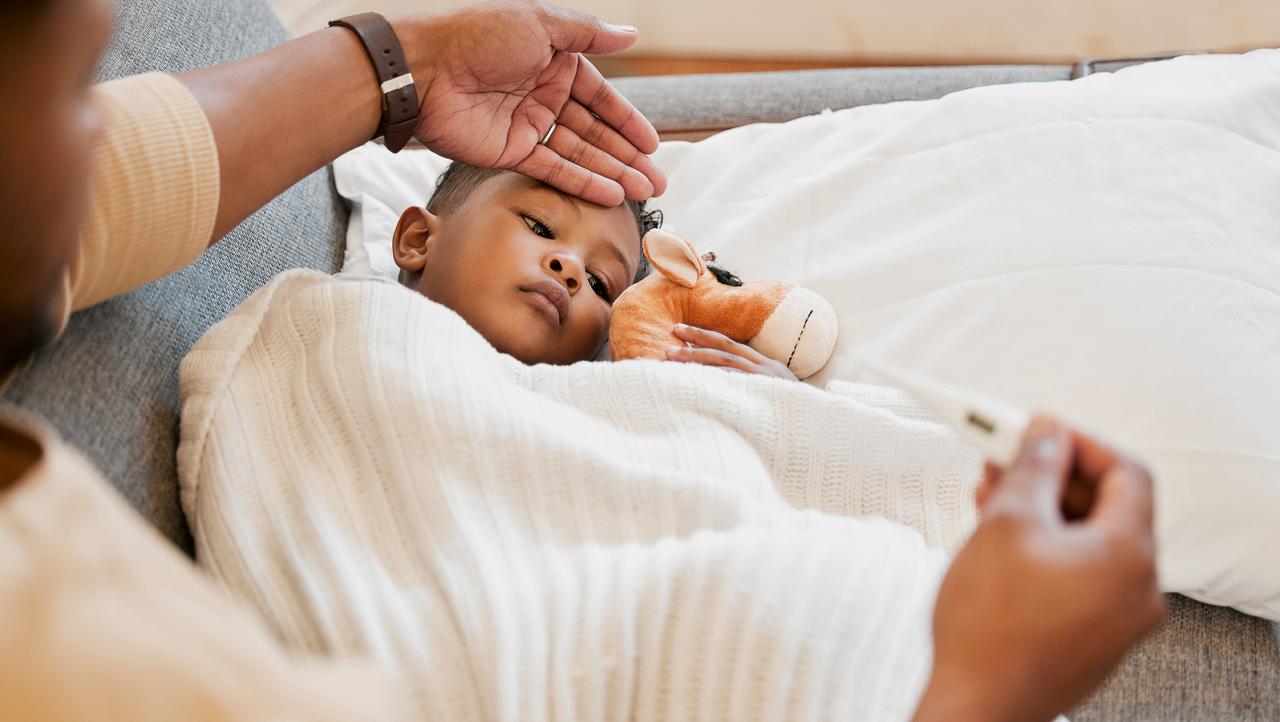
While infants under 3 months of age require immediate medical care if they have a fever, here are some tips to help you care for your child at home.
Focus on your child, not just the number
How your child looks and behaves is more important than the exact temperature. If they are eating, drinking, playing, and responsive to you, the fever is likely less concerning.
Encourage your child to rest
Allow your child to rest as much as they need to. Don’t force them to engage in activities – quiet play or sleep is best while they are recovering.
Appetite often decreases with fever
Fluids are most important when your child is fighting a fever. Fever causes fluid loss in the form of sweat as your child’s body tries to cool down, plus they may drink less if they don’t feel well or have a sore throat.
Giving them milk (breast milk, formula, or cow’s milk, depending on their age) is best for decreased appetites – especially if they are taking ibuprofen, which can upset their stomach.
Do not force your child to eat when they have a fever. Their appetite will undoubtedly return when the fever is gone and their illness is resolved.
No cold baths or alcohol rubs
Never use cold baths to reduce your child’s fever unless your pediatrician instructs you to do so. Instead, you can try to lower their fever with a lukewarm bath.
Never apply rubbing alcohol on your child’s skin to treat a fever, either. Rubbing alcohol can be inhaled or absorbed into the skin, leading to alcohol poisoning or other serious health conditions.
Keep your child comfortable
Children with fevers often go between feeling hot and cold. Chills are a sign that your child’s body is trying to raise its temperature, but excessive bundling can trap heat and cause a fever to rise too high.
To keep them as comfortable as possible, dress your child in lightweight clothing and keep the room cool and well-ventilated. You may want to keep a light blanket nearby for when chills occur.
Stay hydrated
Offer your child lots of fluids to prevent dehydration, such as breast milk, formula, water or electrolyte solutions (Pedialyte). Because sports drinks like Gatorade contain excessive amounts of sugar, they should be diluted with water for toddlers and other children. Never give sports drinks to infants.
How long should a fever last?
Parents often want to know how to get rid of a fever in 24 hours. But the truth is that most fevers last anywhere between 1-3 days. Focus on rest, fluids, and appropriate over-the-counter medications (see below) for the best possible outcome.
Always trust your instincts – if your child seems unwell, you can seek care even if they don’t meet a specific “rule.” If your child’s fever lasts more than 3 days, or goes away and comes back, it’s definitely time to call your pediatrician.
Proper medication use for fevers
Here are some tips to follow when using over-the-counter medications for fever at home:
Acetaminophen and ibuprofen
Acetaminophen (Tylenol) and ibuprofen (Advil/Motrin) are two of the most common medications used to treat fever. Generic formulas are equivalent to name brands and are usually less expensive.
Acetaminophen is usually safe to give at any age – ask your pediatrician first for infants less than 3 months old. However, ibuprofen should never be used for children under 6 months of age.
Give appropriate doses of acetaminophen and ibuprofen based on your baby’s weight.
Acetaminophen can be given every 4 hours, and ibuprofen every 6 hours.
Acetaminophen can be given safely on an empty stomach, but give ibuprofen with milk and/or food.
For ibuprofen, keep in mind that there are two different concentrations of ibuprofen in liquid form – one for infants and one for children, including toddlers. Infant drops are stronger (more concentrated) than the children’s formula.
Confusion between drug names and brands (such as acetaminophen and Tylenol, which are the same) and giving your child other medications that already contain fever reducers can lead to overmedicating. Contact your pediatrician’s office with any questions.
You should also check with your pediatrician before alternating acetaminophen and ibuprofen to reduce fever.
Aspirin
Aspirin should never be used to treat fever in infants, children, or adolescents.
Aspirin has been linked with many side effects, including upset stomach, intestinal bleeding, and Reye syndrome – a serious illness that causes swelling of the liver and brain.
Your thermometer options
You will need to use a thermometer at home to check your child’s temperature. There are many types of thermometers available to choose from, including these.
Digital thermometers
Digital thermometers are used by mouth (orally), in the rectum (rectally), or in the armpit (axillary). Whichever method you use, clean the thermometer with lukewarm soapy water or rubbing alcohol before each use. (Once you have used a digital thermometer rectally, you should never use it orally – label it to be sure.)
For oral use (4 years and up) – Oral measurements can be inaccurate if your child is congested and breathing more through their mouth. Wait 15 minutes after your child eats or drinks to take their temperature orally.
Turn the thermometer on, then gently place the tip of the thermometer under one side of your child’s tongue, toward the back. Have your child keep their lips closed, then read the temperature when you hear the thermometer beep.
For rectal use (under 3 months old) – Place a small amount of lubricant on the top of the thermometer and turn it on, then lay your child face down or on their side with their knees drawn up to their belly.
Gently insert the thermometer into their rectum, about ½ to 1 inch deep (or when the silver tip of the thermometer disappears). Place your other hand on your child to hold them steady, then read the temperature when you hear the thermometer beep.
For axillary use (3 months old and up) – Turn the thermometer on, then place the tip inside your child’s armpit (at the top, next to the skin).
Hold your child’s arm tightly against their chest, then read the temperature when you hear the thermometer beep.
Ear (tympanic) thermometers
Ear (tympanic) thermometers measure your child’s temperature from the eardrum and give accurate readings from 6 months old and up.
Put a disposable cover on the tip of the thermometer for each use, which helps prevent earwax build-up.
Gently pull your child’s ear straight back and remind them not to move.
Place the tip of the thermometer just inside the ear canal, being careful not to push in too hard or too far.
Press the button until the thermometer beeps, then remove the thermometer from the ear and read the temperature.
Throw the used cover away.
Mercury, forehead strip, and pacifier thermometers
The American Academy of Pediatrics advises parents not to use thermometers that contain mercury, since your child could be harmed if the thermometer breaks. Avoid forehead strip and pacifier thermometers as well, which are often inaccurate.
Temporal artery thermometers
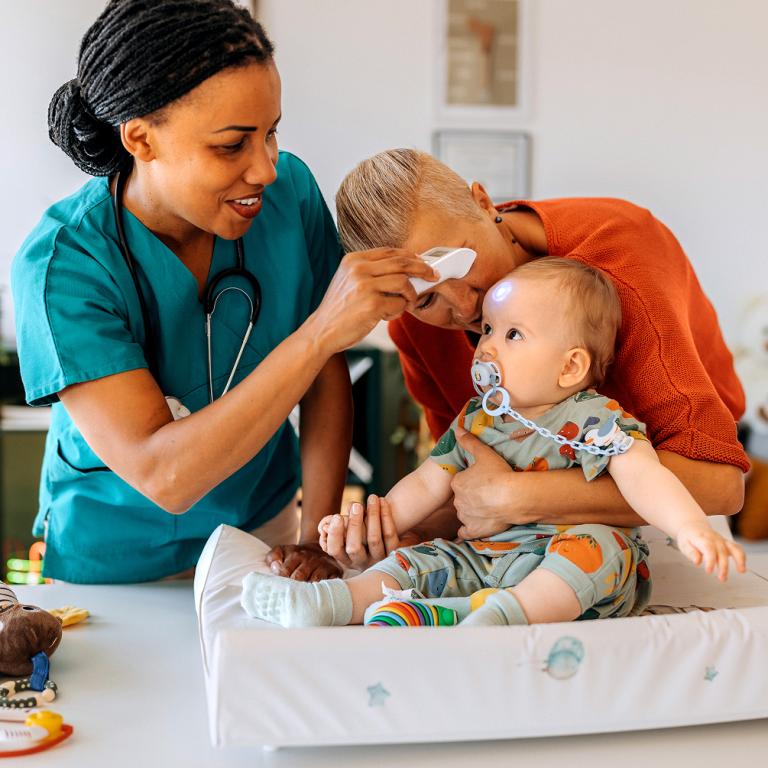
Temporal artery thermometers scan your child’s forehead, using heat from their temporal artery to measure their temperature. This new type of thermometer is quick and easy to use, even while your child is asleep. However, their reliability has not been verified.

When febrile seizures occur
A sudden spike in fever may cause a febrile seizure in some children (usually between 6 months and 5 years of age). Febrile seizures are usually not harmful, although they can be extremely frightening for parents and others to witness. Symptoms may include shaking or jerking of the limbs, rigidness, eye rolling, irregular breathing, vomiting, loss of bladder or bowel control, and loss of consciousness.
If your child has a febrile seizure, you must act immediately to prevent injury:
Place your child on the floor or bed away from any hard or sharp objects.
Turn their head to the side so any vomit or excess saliva can drain from their mouth.
Do not place anything else into their mouth – your child will not swallow their tongue.
Contact your pediatrician immediately.
If the seizure does not stop after 5 minutes, call 911 or your local emergency number.
How long should a fever last?
If a fever lasts more than 3 days, or goes away and comes back, contact your pediatrician to schedule an appointment.
Always trust your instincts – if your child seems very unwell, seek care even if they don’t meet a specific rule or timeline. You know your child best!