Ready to ditch the diapers? Toilet training and bedwetting are normal parts of development that happen on different timelines for every child. Patience, encouragement, and understanding are key to helping your child successfully transition from messes to milestones.
Table of contents
- Introduction
- Toilet training
- Readiness is more important than age
- Every toilet training skill develops on its own schedule
- Use gentle encouragement and positive reinforcement
- Establish a toilet training routine
- Expect setbacks and regression
- Toilet training for children with special needs
- Bedwetting
- Treatment options for bedwetting
Toilet training
When to start toilet training
How do you toilet train your child? What are the best potty-training techniques? Can you tell when to switch to pullups or underwear?
Parents who are eager to say goodbye to diapers often have questions like these, but the truth is there’s no universal potty-training age. It’s important to let your child’s cues – and not societal pressure – guide their timing.
Toilet training is a learning process, not a one-time event
Toilet training involves several developmental skills, including physical, emotional, and cognitive readiness. Children typically start showing signs of toilet training readiness between 18-30 months of age, but some may not be ready until after age 3. The best time to start adult-led potty training is after 30 months old. This means that if they use the toilet on their own prior to that, it is ok. They should not do timed toileting or making them sit until after 30 months though. Early adult led potty training can lead to holding behaviors that can lead to constipation later in life.
Readiness is more important than age
Age is just a number. Watch for the physical signs that your child may be ready to begin toilet training, such as:
Staying dry for at least 2 hours at a time during the day
Waking up dry from naps
Having regular, predictable bowel movements
Recognize the urge to urinate or have a bowel movement (they may squat, grunt, or go to another room to hide)
Being able to pull their pants up and down with or without assistance
Some emotional and cognitive signs of toilet training readiness include:
Showing curiosity about the toilet or the bathroom habits of others
Expressing a dislike for wearing dirty diapers
Asking to wear “big kid” underwear
Being able to follow simple instructions, such as “Go sit on the potty”
Having pride in their accomplishments
Every toilet training skill develops on its own schedule
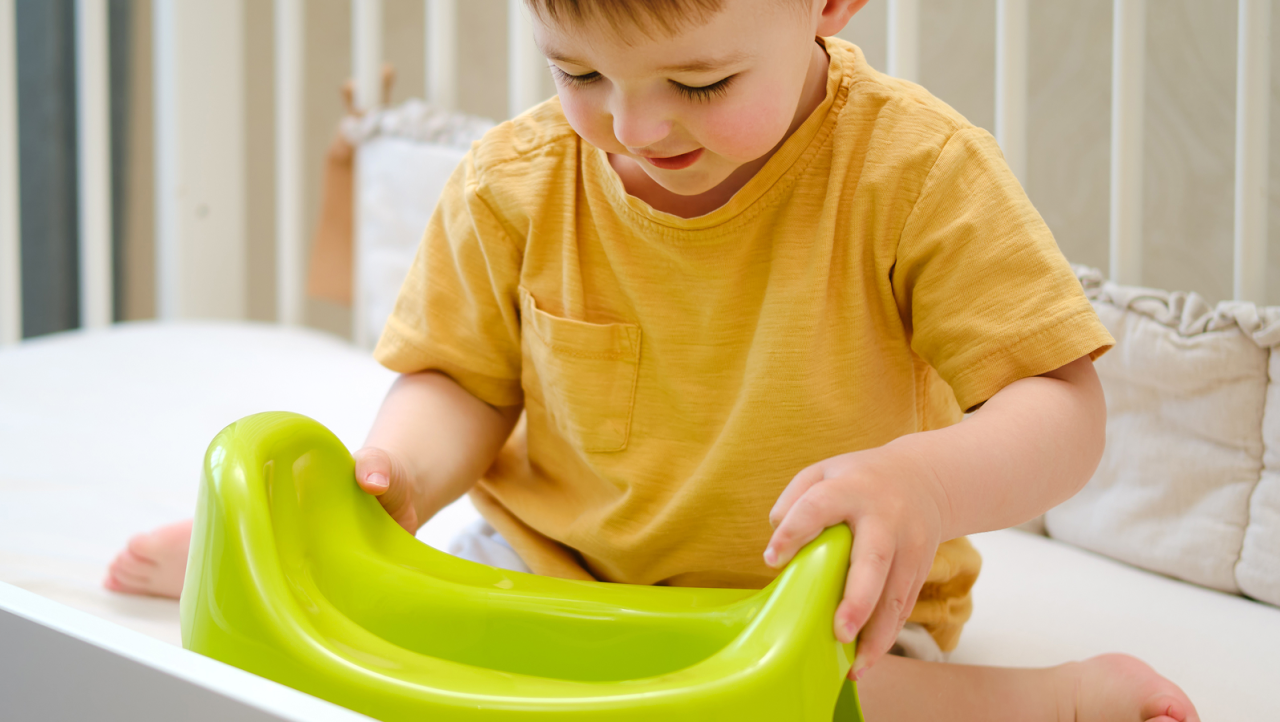
Wondering how long it takes to potty train a toddler? Some children take to potty training right away, while others need time to master all the skills that using the toilet regularly requires. These skills include:
Recognizing the need to go to the bathroom
Making it to the toilet or potty chair in time
Removing all necessary clothing
Sitting on and getting off the toilet or potty chair
Starting to wipe themselves - most children cannot wipe until kindergarten and should still have parents do a check to ensure cleanliness
Flushing (if using a toilet)
Washing their hands
Your child may master these skills in a different order or at different speeds, depending on their readiness. It may help to break these skills down into smaller, more manageable tasks and teach them one at a time.
If your child shows resistance, you can slow down and adjust your approach. For example, start with your child sitting on the toilet or potty chair fully clothed, then gradually introduce removing their diaper. If they refuse outright, do not push them, just allow them more time.
Use gentle encouragement and positive reinforcement
Using the toilet and staying dry are reasons to celebrate! Be sure to offer praise when your child tries or succeeds – even if there’s a mistake, like not making it to the toilet fast enough. If your child has an accident, have them assist with the clean-up and encourage them to try again next time.
Be sure to avoid any punishment or negativity, as shaming or scolding can cause toilet training setbacks and anxiety. You should never withhold food or punish your child for failure. Instead, acknowledge every success – no matter how small – to help build your child’s confidence.
For positive reinforcement, give them verbal praise, hugs, high-fives. Do not offer small rewards such as stickers, snacks, or small toys. This can lead to the child holding out until they get the prize and then may still refuse to go. Try to avoid asking them, “Do you have to go potty? Rather, say “let’s go to the potty or let’s race to the potty.” During the toddler stage of development, kids are trying to develop their own identity which leads to them rejecting many things that parents suggest. As you may already be aware, “No” is a common response to things that they may even want to do. Many parents use a potty-training chart to track each time their child uses the toilet successfully, with the promise of a bigger prize once they reach a certain goal.
You can make things even more fun by decorating the toilet or potty chair or creating a potty jar with activities inside. Reading special potty-themed books together can also help make going to the bathroom a normal, positive experience.
Establish a toilet training routine
Have your child sit on the toilet or potty chair at regular intervals throughout the day. You can start with specific times, such as first thing in the morning, after meals, before and after naps, and at bedtime. Or try taking them to the bathroom every 30-60 minutes, using a timer to remind them when it’s time to go. Everyone who cares for your child should follow the same toilet training schedule.
Stay in the bathroom with your child and offer books or toys to help them relax. If your child resists or doesn’t urinate after a few minutes, don’t force it – just try again next time. If they seem fearful of using the toilet, back off and try again in a few weeks. You should never force or pressure your child during this process.
Expect setbacks and regression
Be prepared that any changes to your child’s environment can lead to temporary setbacks, such as:
A new sibling
Starting a new school year
Moving
Traveling
Constipation or other illnesses
It’s also common for children who are successfully potty-trained to have accidents again, once the initial excitement wears off.
Handle these situations calmly and supportively, without reverting to diapers unless absolutely necessary. With consistency, most children are able to get back on track.
Toilet training for children with special needs
Every child can learn to use the toilet successfully, although children with physical or developmental differences may require tailored training approaches. Work closely with your pediatrician, therapists, and school personnel to create a coordinated plan.
Establishing a routine is especially important. Start with small, achievable steps, such as sitting on the toilet, recognizing the feeling of wetness, or using a communication device or picture to signal the need to go if your child is limited verbally. Be patient, as it may take your child more time to learn each stage.
To familiarize your child with the toilet, let them explore the bathroom and see and hear flushing. If your child has sensory issues, use soft lighting and play calming music to create a comfortable atmosphere. You can also use a footstool or a padded toilet seat to help your child feel safer and more secure on the toilet.
Repetition, visual supports, and positive reinforcement are highly beneficial for children with special needs as well.

Bedwetting
Bedwetting is often out of your child’s control
Bedwetting, or nocturnal enuresis, is the involuntary loss of urine during sleep in children who are usually past the age of toilet training (age 5 and up). Bedwetting occurs when your child cannot hold their urine or wake up when their bladder is full, resulting in nighttime accidents.
Bedwetting is very common and affects a significant percentage of children throughout adolescence:
5 years old: 15-20%
7 years old: 10%
8-10 years old: 6-10%
11-13 years old: 4-5%
14-16 years old: 2-3%
17-18 years old: 1-2%
Most children outgrow bedwetting naturally, often due to delayed nighttime bladder control or deep sleep patterns. However, bedwetting can also be caused by genetics, underlying medical conditions (such as urinary tract or bladder infections), or hormonal factors (some children have low levels of ADH, the antidiuretic hormone that helps reduce urine production at night). If your child is still having issues at night after 5 years old, the most common cause is constipation. The stool burden can press on the bladder and not allow it to fully release all the urine present. Once asleep and more relaxed, this residual urine often leaks out. Even if your child has a BM everyday, they still may have constipation. Signs of constipation include: pooping less than once daily or more than twice daily, dense stools that have cracks in it, look like pellets pushed together, or just small pellets, or long thin snake like stools. These children often tend to be bloated and gassier as well. If this is the case, make an appointment with your provider for tips to help with constipation, and have things like sleep apnea, urinary strictures, or other medical conditions ruled out first.
Avoid blame, shame, or punishment
As frustrating as late-night pajama and bedding changes can be, bedwetting is not caused by laziness or defiance. Children should never be teased or punished for wetting the bed, which can lead to increased stress, lower self-esteem, and even more frequent bedwetting. Instead, focus on providing them with reassurance and support.
Strategies to help reduce bedwetting
You and your child can try using these strategies to help reduce the number of bedwetting accidents:
Encourage your child to always use the bathroom right before bed.
Limit their fluids at least 1-2 hours before bedtime.
Avoid any beverages with caffeine and sugar, which increase urine production.
Schedule regular bathroom breaks throughout the day.
Protect your child’s bed with a waterproof mattress cover and keep extra sheets on hand.
For a quick change, put down medical chux over the sheet, and repeat with 1-2 more series of chux then sheet. This way you can remove the wet sheet and chux and have dry sheets ready to go underneath to save time.
Use nightlights to light the path to the bathroom in the dark.
Celebrate dry mornings with positive reinforcement.
When to seek medical advice for bedwetting
Consult your pediatrician if your child:
Is over 7 years old and still wets the bed regularly
Was dry for 6+ months and has started bedwetting again
Also has daytime accidents or frequently feels the need to urinate
Is also constipated or has urinary pain
Snores or has symptoms of sleep apnea (such as gasping or choking during sleep)
Shows signs of stress
Treatment options for bedwetting
Your pediatrician can check for any underlying cause(s) of your child’s bedwetting and recommend available treatment options, such as:
Lifestyle changes
The prevention tips listed above, plus cognitive-behavioral strategies and bladder training, may be part of your child’s treatment plan. These strategies focus on reducing stress, reframing negative thoughts about bedwetting, and encouraging open communication. Increasing fluids, fiber, and activity to promote normal daily BMs.
Bedwetting alarm
This small, battery-operated device connects to a moisture-sensitive pad on your child’s pajamas or bedding. When the pad senses any wetness, the alarm goes off – ideally waking your child just as they begin to pass urine, so they can get to the toilet. (If your child is a heavy sleeper, you or someone else may have to listen for the alarm and go wake them.)
Bedwetting alarms are available without a prescription at most pharmacies and may be effective for motivated older children.
Medications
Desmopressin is an oral tablet for children 6 years and up that reduces the amount of urine made at night, but it is a short-term tool – not a long-term solution. Desmopressin is primarily used for special situations, such as sleepovers or overnight camp. Bedwetting usually starts again once the medication is stopped.
If your child has a small bladder, an anticholinergic medication like oxybutynin may help reduce bladder contractions and increase how much urine their bladder can hold. However, desmopressin is generally preferred due to fewer side effects.
Bedwetting patience pays off
Effective treatment may take time to be successful – but again, most children outgrow bedwetting on their own. With patience, encouragement, and understanding, your child can look forward to dry nights ahead.